NFL Universe Football Wide Receiver Guide — Catching & Timing
NFL Universe Football wide receiver guide for catching timing, diving in bounds, reading the quarterback and avoiding common WR mistakes.
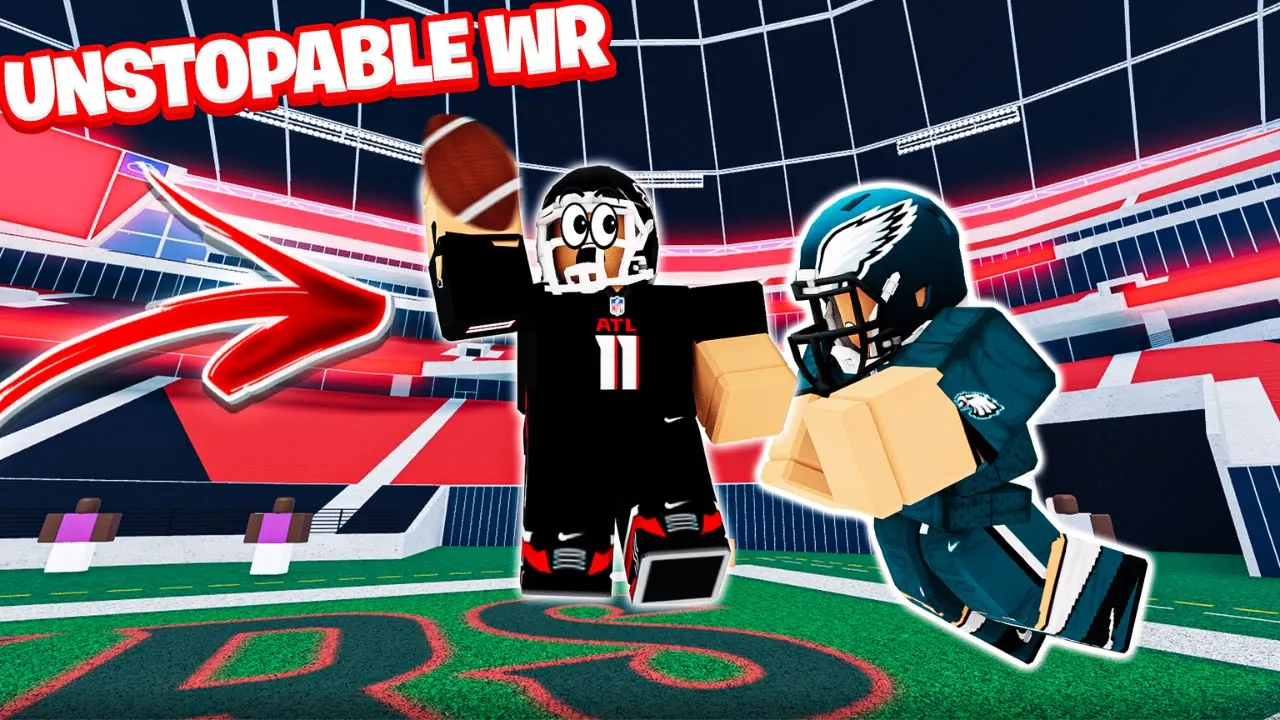
NFL Universe Football wide receiver has enough source depth for a standalone page. The collected WR tutorial focuses on catch timing, diving in bounds, reading the quarterback, and understanding that not every miss is the receiver's fault. This page turns those points into a playable WR routine instead of a loose source summary. Seen in footage · 2026-09-16
Quick answer
A better WR does three things before blaming the pass: gets in position early, times the catch action, and reads the quarterback's release. Diving can save boundary plays, but it is not a button to spam. The WR tutorial gives enough support for timing, in-bounds dives, QB reading, and attacking the ball; exact catch formulas and fixed controller behavior still need in-game verification.
What to do first
| Skill | Why it matters |
|---|---|
| Catch timing | The tutorial repeatedly contrasts regular catches with timing-based catches |
| Dive in bounds | Useful when the ball is placed near the boundary |
| Watch the quarterback | Helps anticipate throw timing |
| Attack the ball | Do not wait passively if the throw is contested |
Start with catch timing in low-pressure situations. Then add boundary plays where you may need to dive or adjust back to the ball. Finally, practice reading the QB. If the quarterback is winding up late, moving under pressure, or throwing across the field, your route and catch timing must adjust.
Source-backed WR details
The mined WR tutorial supports a player-handbook structure: ordinary catching, timing catches, controller caveats, dive-in-bounds situations, and QB reading. Comments also show that catching frustration is a real user pain point, but comments do not prove mechanics. Use comments for FAQ wording, not for hard gameplay rules.
| Advice | Label | How to apply it |
|---|---|---|
| Read the QB before the ball arrives | creator-tested | Watch the release and throw angle, not just your route. |
| Attack contested throws | creator-tested | Move toward the catch point instead of waiting flat-footed. |
| Dive near boundaries | creator-tested | Useful when the throw pulls you toward the sideline. |
| Exact catch timing window | needs in-game check | The collected sources do not prove a frame-perfect window. |
Mistakes and caveats
The WR source points out that quarterbacks can miss, receivers can mistime catches, and defenders can pressure the play. Use Quarterback and Controls together with this page. A missed catch is not always proof that WR controls are broken. It may be a late throw, bad route spacing, poor camera angle, mistimed input, or defender pressure.
Do not dive on every pass. Do not stand still waiting for the ball to come to you. Do not treat one controller tip as universal for every device. If catching feels inconsistent, check Settings, then test basic catches before changing advanced habits.
Verification notes
The WR source mentions controller input, but this page does not publish a fixed keybind table until in-game verification. Use Settings before changing device habits.
Verified: WR has enough dedicated tutorial material for a child page, and the source discusses catching, diving, QB reading, and controller caveats.
Creator-tested: timing, attacking the ball, and in-bounds diving are actionable advice from gameplay footage.
Needs in-game check: exact catch windows, current controller mapping, and any claim that one input method is always easier.
Related next step
If your issue is the throw, read Quarterback. If your issue is input timing, read Controls. If your camera or device setup feels wrong, read Settings. For broader role choice, use Positions.
FAQ
Should wide receivers always dive?
No. Diving is situational, especially around boundary catches or contested balls. Use it when the ball placement demands it, not as a default on every throw.
Is WR easier than QB?
The collected sources do not prove that. WR has its own timing and positioning demands.